Why We Backed Deep Cogito
The future of post-training
Aditya Agarwal · August 26, 2026
Everyone agreed you needed ten billion dollars to build a frontier model. Drishan Arora spent less than three and a half million.
That number covers every model Deep Cogito trained through the summer of 2025, from 3B parameters to 600B+, including synthetic data generation and more than a thousand training experiments. The first batch was built by a handful of people in roughly seventy-five days.
When I tell people this, I get one of two reactions. Either it can't be true, or it's just a fine-tune so it doesn't count.
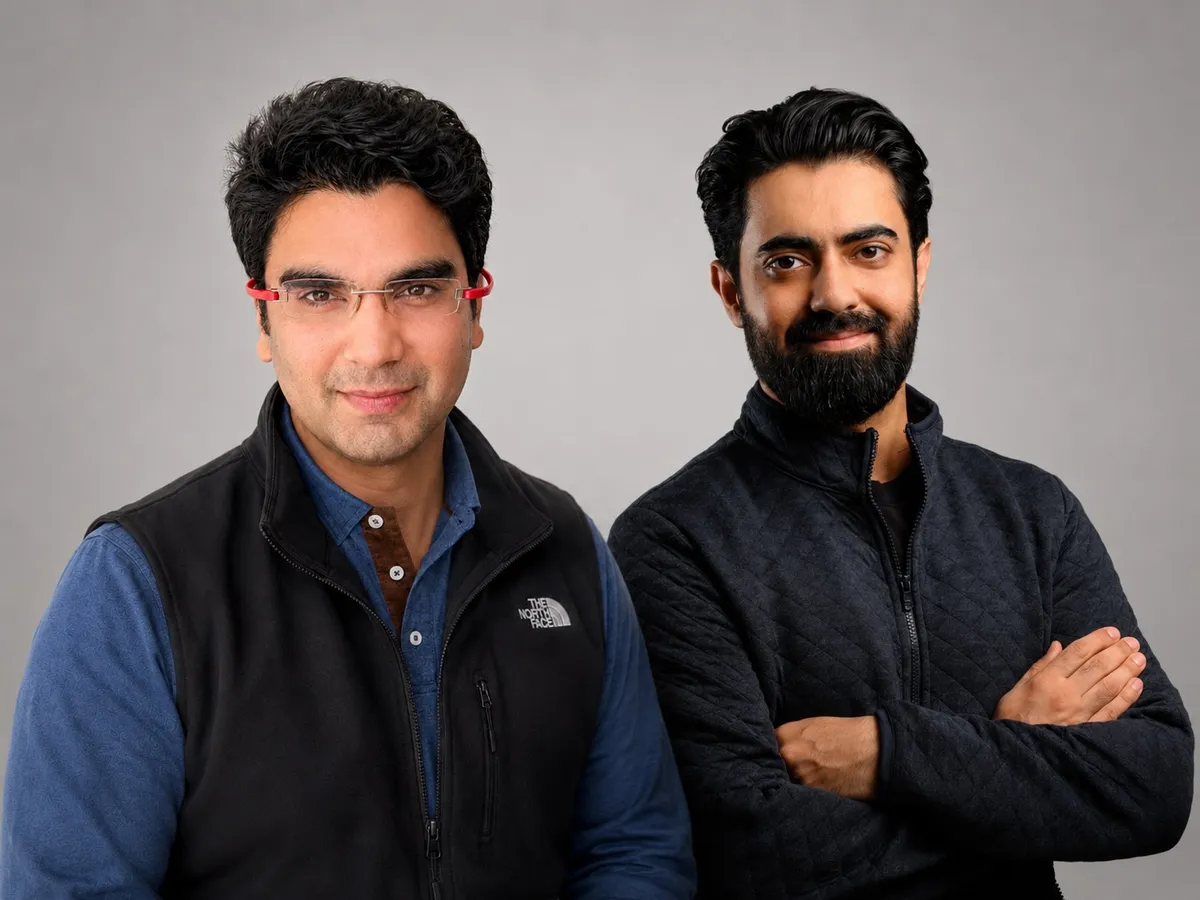
Drishan and Dhruv joined SPC's Founder Fellowship in March of 2024. Drishan told me what he was actually building after they joined. He explained that the search company on the application was not the plan. The plan was to take open pre-trained models and, through much better alignment, make Llama 3 as good as GPT-4.
Three months later, Llama 3.1 and Gemma 2 shipped in the same week and made his entire approach obsolete.
Every founder says they're resilient. Drishan did not flinch. The releases had proven his underlying premise, that smaller models could get much closer to large ones than the field assumed, and simultaneously destroyed the specific path he'd chosen to prove it. He retrained on the new bases, kept his schedule, and came back with strong eval results. The public releases that followed proved the method trained by a tiny team across open-weight models.
A few weeks after that, we worked on the problem that was actually blocking him, which was not technical. The industry consensus was that in order to produce a leading model, you needed billions of dollars.
Deep Cogito was not fine-tuning Llama. It was forking it, continuing to pre-train on top of the base before any alignment work. That's both technically accurate and immediately legible to anyone who has watched a fork of a large open-source project turn into a real company. It happened in databases. It happened in operating systems.
Pre-trained models have become a commodity. Llama, DeepSeek, Qwen, Kimi, GLM, are all converging on similar capabilities, all available to anyone. Almost every post-trained variant of those models is badly under-elicited. The intelligence is sitting there in the weights and nobody is getting it out.
So Deep Cogito went to post-training as the actual frontier. Their core research direction is Iterated Distillation and Amplification. Amplify, which means letting the model burn extra compute to reach an answer better than it could produce directly. Distill, which means folding that reasoning process back into the weights so next time it just knows. Drishan describes it as AlphaZero applied to natural language.
Cogito v2.1 uses fewer tokens than any comparable reasoning model, roughly half of what Gemini 2.5 Pro spends. The model doesn't have to think out loud for as long to get there.
The team is not building open models as a distribution strategy.
His argument is that human oversight is about to stop being sufficient. Once models are meaningfully smarter than the people supervising them, alignment techniques that depend on human judgment start generalizing in ways nobody can inspect. It matters enormously whether frontier models are open and inspectable, and it matters where they're built.
Deep Cogito raised $43 million led by TQ Ventures, with Benchmark, Nexus Venture Partners, Atreides Management, South Park Commons, and Zscaler, who came in first as a customer.
Zscaler didn't want a frontier model with a thin layer of customization on top. They wanted their own products, their own metrics, and their own outcomes trained into the weights. Deep Cogito is the company that can do that, because they spent two years proving it in public with models anyone could download and check.
Drishan was two years early on open models, which for about eighteen months was indistinguishable from being wrong. It isn't anymore.
The team is hiring researchers and engineers in San Francisco.